

How to Wash Your Hair Properly: 5 Steps for a Healthier Scalp (Most People Get Step 1 Wrong)
Most people think about hair care in terms of their hair — its length, texture, whether it's dry at the ends or frizzy in humidity. But the single most important decision in any hair care routine is not about your hair at all. It is about your scalp. Choose the wrong shampoo for your scalp type, and no amount of conditioning or masking will fix what the shampoo is causing. Get that one choice right, and everything else becomes easier. Here are five steps that will change how you wash your hair — starting with the one that matters most.
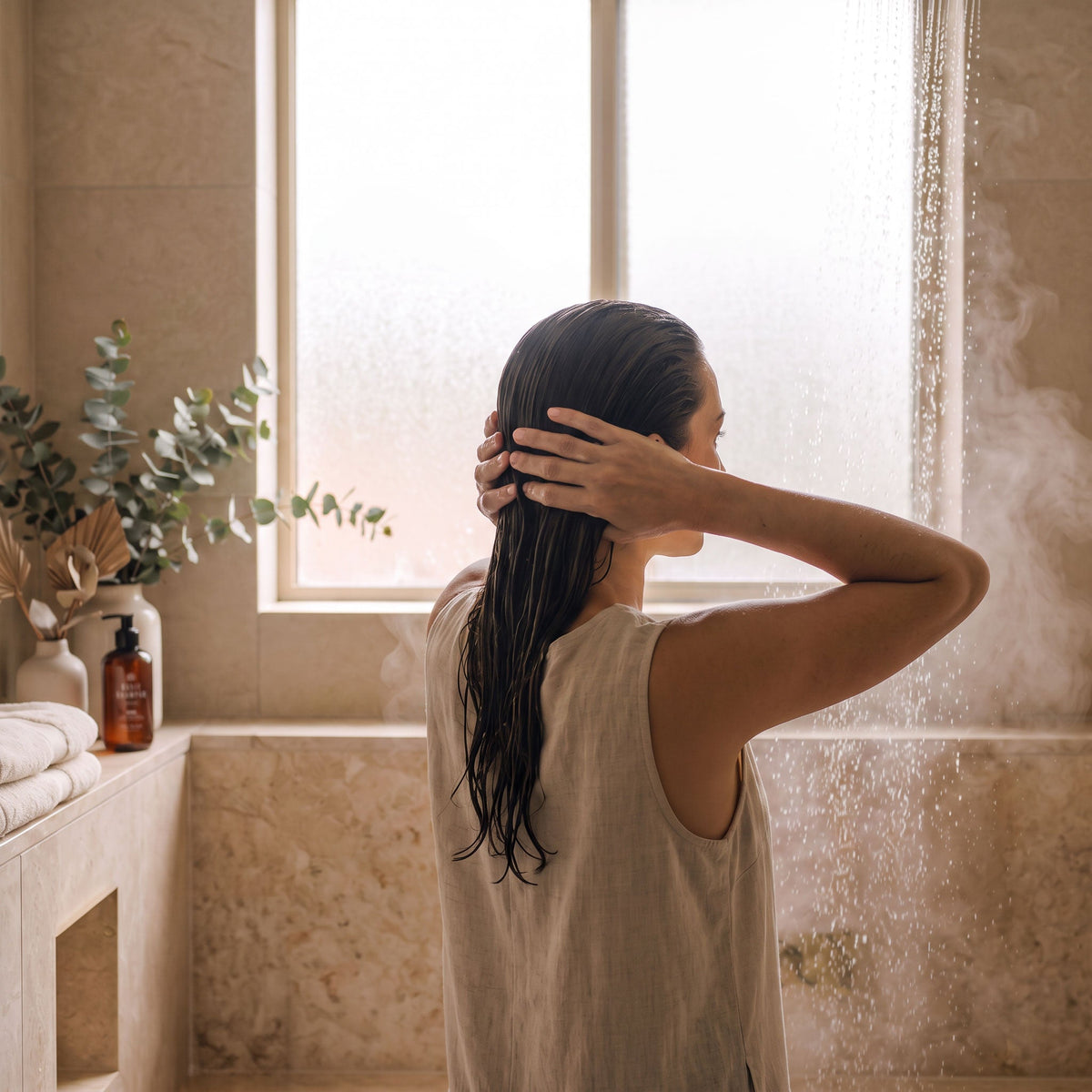
Five small adjustments to how you wash your hair can make a meaningful difference to scalp health over time
None of these require new products or extra time. They require attention to details most people have never been told.
Step 1: Choose your shampoo based on your scalp, not your hair
This is where most hair care routines go wrong. People with long hair often reach for "moisturising" shampoos because their ends feel dry — but if their scalp is oily or normal, a moisturising formula will make the root situation worse and accelerate greasiness. The scalp and the ends of the hair have different needs, and the shampoo addresses the scalp. Conditioner, hair oils, and masks address the lengths and ends.
The practical division is simple: identify whether your scalp tends toward oily or dry. An oily scalp needs a clarifying, rebalancing formula. A dry or sensitive scalp — or one that has been through chemical treatments, bleaching, or heat damage — needs something gentler that cleanses without stripping.

For Normal to Oily Scalp
Basic Shampoo REFRESH
Amino acid-based cleanser that rebalances scalp oils and removes buildup without disrupting the scalp's natural barrier. With Hydrolyzed Wheat Protein, Vitamin B5, and Trehalose. No SLS, no silicone, no synthetic fragrance. Available in multiple scents. Made in Hong Kong.

For Dry, Sensitive or Damaged Scalp
Basic Shampoo MILD
Mild amino acid formula with Grapefruit Seed Extract to balance the scalp's micro-ecology. Olive Oil Extract, Hydrolyzed Wheat Protein, and Vitamin B5 strengthen and condition without residue. Suitable for bleached and chemically treated hair. No SLS, no synthetic fragrance. Made in Hong Kong.
Step 2: Get the water temperature right
Hot showers feel good, particularly in winter — but washing your hair with hot water strips the scalp of too much of its natural oil. The scalp responds by producing more oil to compensate, which accelerates the grease cycle and can contribute to dandruff and scalp sensitivity over time.
The recommended range is lukewarm: 36°C to 38°C. Warm enough to dissolve oil and lift product buildup, but not so hot that it damages the hair cuticle or over-strips the scalp. If conditions allow, finish with a brief cold rinse. Cold water closes the hair's cuticle scales, which reduces frizz, adds shine, and helps protect the follicles from environmental damage. It takes about fifteen seconds and makes a noticeable difference to how the hair looks once dry.
Step 3: Pre-rinse for at least one minute before applying shampoo
Applying shampoo to barely damp hair is one of the most common mistakes in the routine, and it costs you in two ways: you end up using more shampoo than necessary, and the concentrated cleanser sits against dry scalp skin longer than it needs to.
A thorough one-minute rinse with warm water does real work before the shampoo even touches your hair. It loosens surface dust and excess oil, begins softening product buildup, and allows the shampoo to spread and lather much more efficiently when you do apply it. The result is a better cleanse with less product — and less potential for irritation.
Step 4: Lather the shampoo in your palms before applying it
Pouring shampoo directly onto the scalp means that a concentrated amount of the formula sits on one spot before it has any chance to dilute or foam. Even gentle formulas can cause irritation this way. Instead, dispense the shampoo into your palm, add a small amount of water, and work it into a lather before applying it across the scalp.
When you do apply it, use the pads of your fingers — not your nails — and work in gentle circular motions. This stimulates blood circulation in the scalp (which supports healthy hair growth) without causing the micro-abrasions that fingernail scrubbing can create. There is no need to work the shampoo through the lengths of your hair; the foam that rinses down from the scalp is sufficient for the mid-lengths and ends.
Step 5: Dry your hair promptly after washing
When hair is wet, the cuticle — the outermost layer of each strand — is open and at its most vulnerable to damage. Sleeping on wet hair, or leaving it damp for extended periods, creates friction against pillowcases that progressively thins and roughens the cuticle layer. It can also cause headaches and in some cases contributes to scalp issues in humid climates like Hong Kong, where moisture lingers.
Blow-drying promptly is the better option — not blast-drying on high heat from root to tip, but a considered approach. Start on medium heat, keep the dryer moving, and finish each section with a burst of cool air. Alternating between warm and cool this way closes the cuticle after drying each section, which reduces frizz and leaves the hair with better surface texture. Keep the dryer at least 15cm from the scalp and hair to avoid heat concentration.
Frequently asked questions
How often should I wash my hair?
This depends almost entirely on your scalp type, not your hair length or texture. Oily scalps typically need washing every one day. Normal scalps can usually go one to two days between washes. Dry or sensitive scalps, and those with chemically treated or bleached hair, often do better with fewer washes — around three times a week — since over-washing removes the natural oils that are already in short supply. If you find your scalp getting oily faster after each wash, this is often a sign you are washing too frequently and the scalp is overcompensating.
Should I apply conditioner to my scalp?
For most commercial conditioners, no — they typically contain silicones that coat the hair shaft effectively but can build up on the scalp, clog follicles, and worsen oiliness. The standard advice is to apply conditioner from the mid-lengths to the ends and avoid the roots entirely. That said, if you are using a silicone-free conditioner and you have a genuinely dry or sensitive scalp, working a small amount into the scalp is not necessarily harmful — silicone-free formulas do not carry the same buildup risk. If your scalp feels dry or tight after shampooing, it is worth checking whether your shampoo is the right formula for your scalp type first, and then deciding whether the scalp needs any additional conditioning from there.
Why does my hair get oily again so quickly after washing?
Rapid oiliness after washing is usually one of two things: either the shampoo is stripping the scalp too aggressively and triggering compensatory oil production, or you are washing too frequently and creating the same cycle. Switching to an amino acid-based formula — gentler but still effective at removing buildup — often breaks the cycle within two to three weeks as the scalp recalibrates. Water temperature also plays a role: hot water stimulates oil glands, so cooler washes can help.
What is the difference between SLS shampoos and amino acid-based shampoos?
Sodium Lauryl Sulphate (SLS) is a highly effective but aggressive surfactant — it produces a lot of foam and removes oil very efficiently, but it can strip the scalp's natural barrier and cause dryness, sensitivity, and rebound oiliness over time. Amino acid-based cleansers are derived from natural amino acids, cleanse more gently, and are much less likely to disrupt the scalp's oil balance. They tend to produce less lather but clean just as effectively. For everyday use or for anyone with a reactive scalp, amino acid formulas are the more considerate choice.
Can I use the same shampoo for my scalp and the length of my hair?
Yes, but the shampoo should be chosen for the scalp, and your other products — conditioner, hair oil, leave-in treatments — should address the needs of the lengths and ends separately. Oily scalp with dry ends is a very common combination, and the solution is a clarifying shampoo at the scalp paired with a good conditioner on the mid-lengths to ends. Trying to solve both with the same product in the same application usually compromises both.
Not sure which formula is right for you?
Both the REFRESH and MILD are available as 30ml trial sizes — a low-commitment way to find what your scalp actually responds to before committing to a full bottle.
Explore the Hair Care Range